


CHROs Take Center Stage!
The accelerated digital transformation over the past year disrupted the human resources function as we knew it. Organizations are witnessing a revolutionary change
Redefining the new HR and People Leaders in a Post-Pandemic World
The accelerated digital transformation over the past year disrupted the human resources function as we knew it. Organizations are witnessing a revolutionary change in the way the new Chief Human Resources Officers operate today. What are these changes?
These enhancements are the result of the CHRO shifting focus from an operations-driven role to a more strategic placement in the c-suite. They are being identified as the ‘transformation Gurus’ of the organization as they face the challenging curve-balls pitched by the pandemic in the new normal.
When the pandemic struck, the new normal resulted in the inevitable layoffs of millions of employees across the world. With business down and unemployment and job insecurity looming large, the role of the CHRO necessitated a more adaptive and futuristic outlook. There was a rampant need for the CHRO to reimagine their goals and become catalysts for change.
The HR Leaders are now leading the charge as they reinvent the worker and the workplace. CHROs are widening their perspectives as they revisit the policies and their role in leading their business through the crisis while strategically preparing for the new workplace of tomorrow.
That tomorrow is now today.
The next few sections discuss some of the trends we have spotted as we consult with our clients on the evolving role of the CHRO.
Remote Management
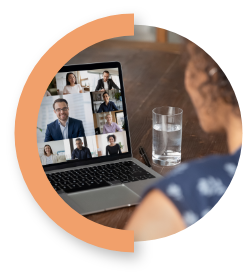
While some pre-pandemic patterns will remain, albeit with a few tweaks, the advent of remote work environments or hybrid business models has led to the formation of new policies on remote management and leadership training on how to manage a workforce functioning from their home offices.
Vikrant Kapur, Head of People India at Better.com, commented on the changing workspace, focusing on the new processes that are now in place and the challenges attached to it. “As new teams come together, the forces that lead to storming will continue to exist. However, the processes of forming and norming that resulted from exploring and breaking bread together have been disrupted. This is where CHROs must become a lot more thoughtful in planning interventions that bring people onboard and together virtually.”
He further highlighted a few methods to aid the processes of forming and norming for the benefit of the HR Leaders:
- Formulate ways to conduct our virtual time together. Are we engaging creatively?
- Leverage VR platforms to build in team-based games and a platform for folks to unwind or ideate ways to give people time off from their system while still at work. We could leverage clubs for people with shared interests to exchange ideas and thoughts on this as well.
- Ideate ways to give people time off from their system while they are still at work.
The lack of social interactions in the workplace is one of the biggest impacts the pandemic has had on working business environments. This impact gets amplified astronomically when it comes to onboarding new team members. “Our virtual ‘zoom boxes’ have broken the process of storming, forming and norming,” adds Vikrant while emphasizing the need for leaders to show up now more than ever to motivate their team as a role model for the organization’s values and behaviour standards.
Ensuring Diversity & Inclusion from Top to Bottom

Keeping the company vision alive, and the workforce focused on the individual and business objectives, despite uncertainty and ambiguity, is imperative. Equally critical is the ability to create trust and belief to build a strong, diverse, and committed team, with a “team-first” mentality aligning the goals of the individual with the goals of the organization in an inclusive, culture-forward approach.
HR leaders today need to attract, develop, engage, and leverage an organization’s talent as the business, customer needs and our society all evolve and bring new diverse skill sets to the company. This is where the CHRO must take D&I execution to a higher level of the talent management process, and that includes how we become more diverse and inclusive and create an equitable environment at the same time.

Such definitions result in an evolving role within the human resources function, paving the way for leaders in charge of D&I who are equally responsible for facilitating business growth as a leader of the firm. Businesses are witnessing a more strategic, agile, and tech-enabled CHRO with a primary focus on people. The new leaders must be an integral part of the decision-making process, constantly evaluating the various lenses attached with diversity and inclusion, ensuring organizations pivot to a virtual engagement process seamlessly across all hierarchies.
“Today we have four generations working together. In a matter of five to 10 years we will have five generations working together, and with that comes an added challenge of diversity, equity, and inclusion. What do these concepts mean for a global company? How do you define DE&I in a global landscape where it means different things in different markets and cultures? All this needs to be addressed without compromising on the foundations of HR, which is delivering a global workforce that is truly engaged and building a culture of execution to deliver business outcomes. That becomes key!” adds Bala.
Transformative Leadership is Key

Who is the new CHRO, and what did we mean by calling them the ‘transformation Gurus’ of today?
Thanks to the pandemic, the ‘frontline’ workers for organizations across industries are a mix of new, much-needed skillsets that focus on empathetic and technologically agile leadership. Below is a list of definitions for the new HR leader.
Artificial intelligence is the new reality of HR—it is no longer a futuristic goal. With AI enhancing the employee experience through increased velocity and transparency across the various facets of HR like payroll and recruitment, the CHRO today needs to adopt and invest in technology to stay ahead of the game. Ensuring regular leadership development and learning, upskilling and cross-skilling programs are vital ways to guarantee a seamless employee experience.
The CHRO must mentor their workforce in sharing goals, purpose, and common understanding to create virtual bridges between teams using social networks. This further helps build social capital and leverage the technology at your disposal! At the same time, the CHRO must also be open to constructive feedback and suggestions to ensure a consistent two-way learning process between them and their workforce.
Empathy and the ability to resolve conflict and manage uncertainties associated with the post-pandemic world are qualities that define the CHRO today. Maintaining a work-life balance and an emotional and mental well-being is gathering greater importance. Employees today are dealing with depression, anxiety, and uncertainty, to name a few. Organising programmes for mindfulness, physical exercise and relaxation can go a long way in alleviating any such issues. For example, financial counselling because of the unusual circumstances would allow employees to contribute fully to work rather than carry the diverse troubles related to their financial uncertainty on their shoulders.
The CHRO is also expected to allay any fears or doubts concerning the future of the employees, their job security, financial options etc. Communication, therefore, is of utmost importance. Showing up as a strong communicator equally adept as a speaker as well as a listener. Being trustworthy, humble, and empathetic would be the hallmark of an effective CHRO.
All this change, however, comes with a warning as Saswati Sinha, Head Human Resources for Cheil India tells us. “As we all know the pandemic has accelerated the need for agility and rapid transformation in all spheres of talent interventions leading to adoption of technology and data in HR solutions. Having said that, experience shows that in this race to adopt new things, we should not end up copying and realize later that the results are not what we expected for our business. It is critical that we customize solutions to our business needs and not just because it is the fashionable thing to do. One size doesn’t fit all and that should be the starting thought!”
Conclusion

Change as a constant,” has never been truer than it is today. Our Chief HR and People Officers have been tested in ways most of us could never have imagined a little more than a year ago. With that said, most of these leaders have arisen to the challenge and, in many cases, elevated the importance of the HR function in their organizations.
The opportunity to redefine both the “worker and the workplace” is no longer a strategic initiative being developed for the next decade, instead this is the New Normal. Velocity is of utmost importance for the CHRO today. Opportunities are grabbed as soon as they present themselves. One must stay a step ahead. Additionally, creative utilization of talent will leverage human capital in the most effective way. The CHRO must enable and ensure the talent is flexible, adaptive, and agile at making decisions.
While the CHRO has a full plate with an intense set of expectations on which they are being measured, the world of business is facing revolutionary change and keeping pace, in fact staying ahead of that change is a measure of success!
The obvious near-term priority is to prepare for the future return to the workplace and the “new normal” while creating a comfortable, reassuring, and safe environment for the ‘comeback’ that is imminent. The CHRO must lead from the front and be visible and accessible at all levels in the organization. This will be achieved by building a culture of trust and transparency within the organization.
2021 is the year for collaborative leadership and the CHRO and their organization have never been more important to redefining the future for organizations.

 English
  Español de México